How Propaganda Continues to Shape Public Opinion
By: Gracie Lindsay
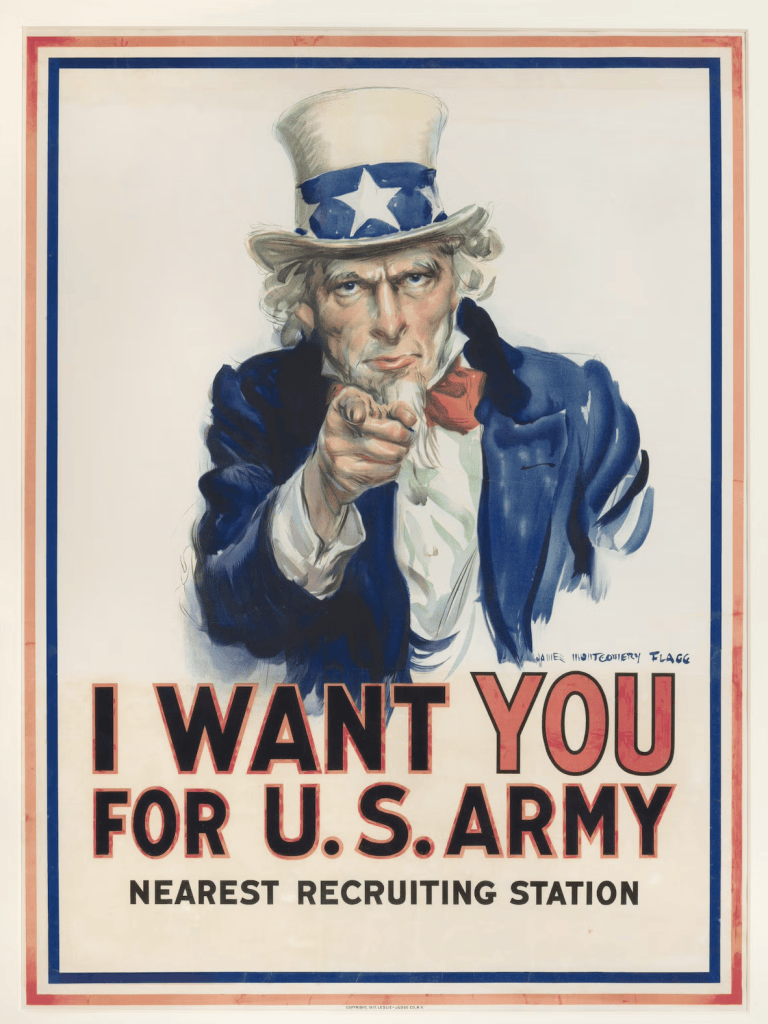
Propaganda has affected public opinion for over a century, but how it is presented has changed tremendously. During World War I, governments used posters, speeches, and newspapers to promote patriotism and rally support for the war. Today, similar strategies are used on social media, where political statements can reach millions of people nearly instantaneously. After listening to the Marketing Muckraking and Civics 101 podcasts, I discovered that propaganda is more than simply conveying misleading information. It also involves influencing emotions, reinforcing current views, and influencing how people perceive those who disagree with them.
Fear and Emotion – Very Powerful Tools of Propaganda
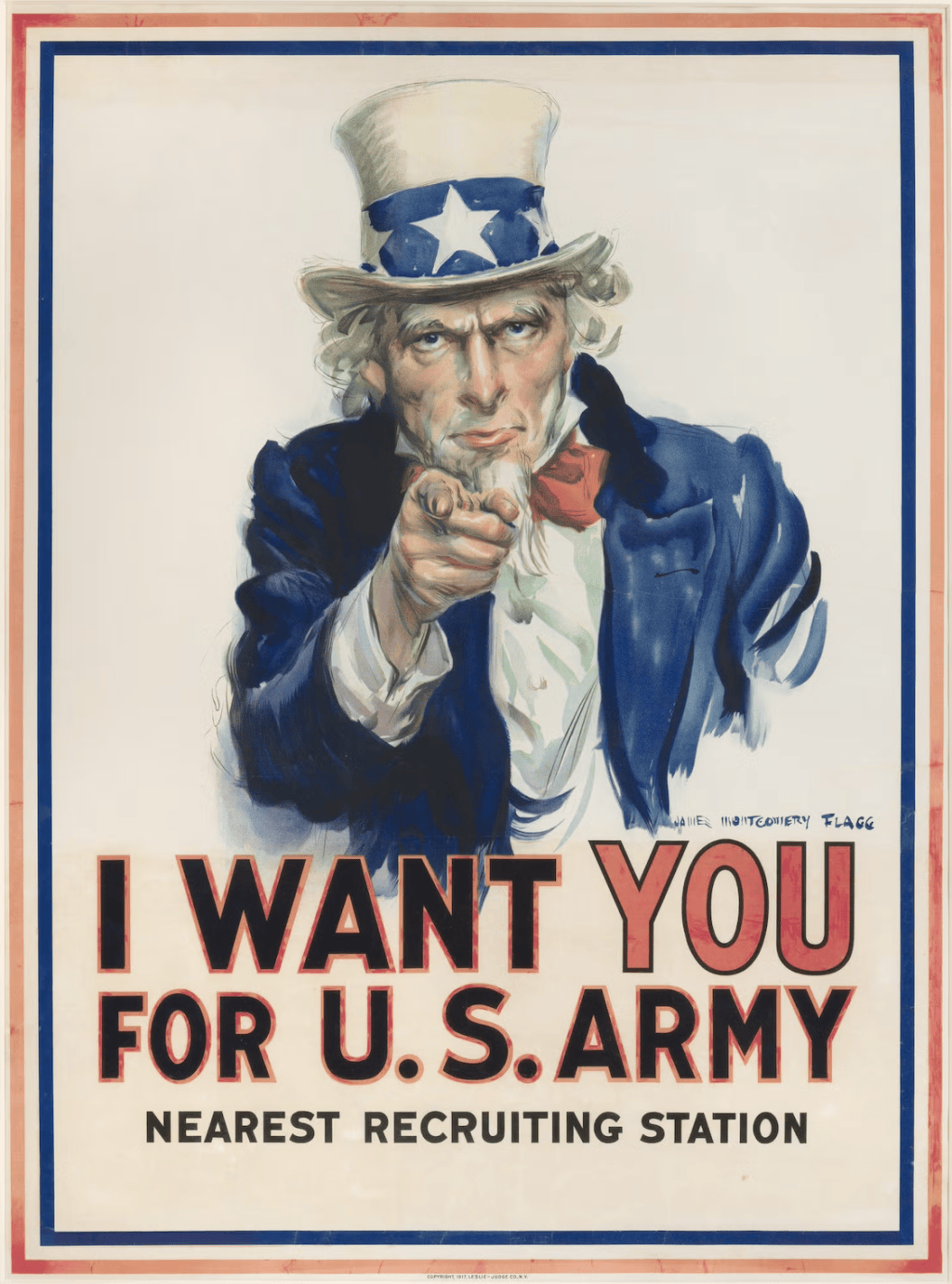
Fear-mongering is one of the most polarizing propaganda strategies. During World War I, governments persuaded populations to support the war by appealing to patriotism and depicting opposing countries as major threats. As discussed in our course materials, propaganda efforts impacted public opinion through a variety of means, including war bonds and public speeches (Moore, 2024). WWI propaganda posters also used striking images and emotional messages to encourage young men to enlist and gain support (Schneider, 2024).
Albers (2022) describes in the Marketing Muckraking podcast how these early propaganda attempts helped build strategies that became common in advertising and public relations. What jumped out to me was how quickly fear may influence people’s choices. When someone receives a message that makes them feel frightened or furious, they may react emotionally rather than question the accuracy of the information. This becomes particularly dangerous, in my opinion, when political propaganda pushes people to see others as adversaries rather than as people who hold different views.
Social Media and the Spread of Division
While propaganda was formerly dependent on traditional media, social media has made it more convenient to convey messages fast and target specific audiences. In the Civics 101 podcast, Capodice and McCarthy (2022) examine how propaganda exploits psychological vulnerabilities such as confirmation bias and people’s need to belong to a community.
I believe this is one of the most serious issues with current propaganda. Social media algorithms frequently present users with content that promotes their existing beliefs. Over time, this can make opposing ideas appear less logical and worsen political divisions.
Artificial intelligence adds to the complexity of the situation. According to an Associated Press article, the Wesleyan Media Project discovered at least 164 political commercials generated or modified with AI during the 2026 election cycle, with 69% lacking AI disclosures (Goldin, 2026). This raises concerns about how quickly audiences can be exposed to fake news without being aware of it.
The Responsibility of Public Relations Professionals
Understanding these strategies is extremely crucial for public relations professionals, as influencing public opinion is a big part of their job. However, I believe there is a significant distinction between influencing an audience and manipulating one. The Public Relations Society of America’s Code of Ethics prioritizes honesty, integrity, and fairness in professional communication (Public Relations Society of America, n.d.). These concepts are especially important given how quickly misinformation can spread. PR professionals should be in charge of validating information, disclosing their sources, and correcting inaccurate claims. They should also assess whether a message is truly educating the audience or merely trying to provoke an emotional response. One of the most important things I’ve learned is that just because a communication technique works does not necessarily mean it’s ethical. Gaining attention through fear or division may have immediate impact, but it can also harm credibility and trust in the long run.
Building Trust Instead of Division
Looking at propaganda from World War I to current political campaigns shows that while means of communication evolve, core strategies frequently remain unchanged. Fear, emotional appeals, and selective information continue to shape how people perceive the world around them.
For me, the most significant takeaway is that public relations professionals must utilize their power wisely. Effective communication should promote understanding rather than exploiting people’s emotions or preexisting biases. In a climate where misinformation is becoming increasingly difficult to detect, preserving honesty and transparency is critical to establishing a lasting public trust.
References
Albers, R. K. (2022, August 17). Marketing, propaganda, and politics from WWI to Trump [Audio podcast episode]. In Marketing Muckraking. https://rachaelkayalbers.com/episode-20-marketing-muckraking-wwi-propaganda-to-trump-raid/
Capodice, N., & McCarthy, H. (Hosts). (2022, November 29). Propaganda [Audio podcast episode]. In Civics 101. New Hampshire Public Radio. https://www.civics101podcast.org/civics-101-episodes/propaganda
Flagg, J. M. (1917). I want you for U.S. Army: Nearest recruiting station [Poster]. Library of Congress. https://www.loc.gov/item/96507165/
Goldin, M. (2026, September 25). AI ads are popular in the 2026 midterms, but state laws haven’t stopped a lack of disclosure. Associated Press. https://apnews.com/article/artificial-intelligence-campaign-ads-midterms-d375801e10821b3e6ac776ffc77e1f28
Moore, J. (Ed.). (2024). Public relations: Principles, origins, and practice. Cognella Academic Publishing.
picsandportraits. (2019). A brief history of propaganda [Video]. YouTube. https://www.youtube.com/watch?v=zQEnOJInwEg
Public Relations Society of America. (n.d.). PRSA code of ethics. https://www.prsa.org/professional-development/prsa-resources/ethics
Schneider, A. (2024, July 3). We want you to see these World War I propaganda posters. Unframed. https://unframed.lacma.org/2024/07/03/we-want-you-see-these-world-war-i-propaganda-posters